
How Pet Food Solutions Eliminates the Salmonella Risk in Chicken Fat
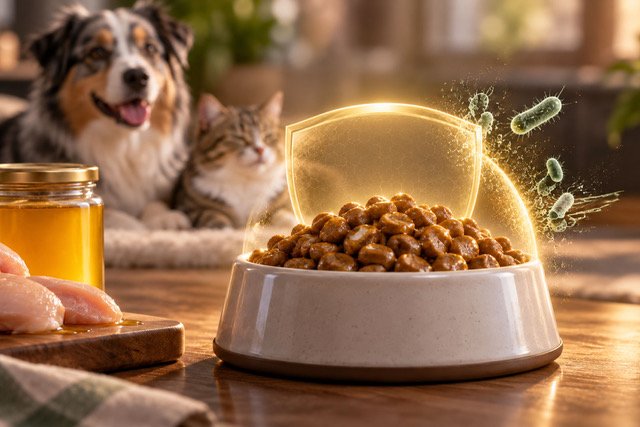
Salmonella remains one of the most serious safety concerns facing pet food manufacturers. In 2025, it was associated with 65% of pet food recalls, rising from 47% the previous year. With the FDA maintaining a zero-tolerance policy for Salmonella in pet food and treats, manufacturers need ingredients and processes that help prevent contamination at every stage. Gold Shield® and GoldPAL Refined Chicken Fat provide that protection by removing the conditions Salmonella needs to grow and verifying every batch through independent laboratory testing. Why Chicken Fat Can Become a Contamination Risk Extrusion exposes pet food to high temperatures that destroy harmful microorganisms. However, chicken fat is commonly applied to the kibble after this critical kill step. If the fat contains Salmonella when it is added, the finished food can become contaminated without passing through another high-temperature process. Fat has historically been considered a low-risk environment because it contains very little available water. During transportation, storage, and transfer, however, small amounts of water can enter tankers, vessels, and production lines. That moisture can create an opportunity for Salmonella to survive when the fat also contains accessible nutrients. Standard rendered chicken fat may retain several non-fat materials that support microbial activity, including: Water-soluble organic compounds, such as amino acids and nucleic acids Essential metals Inorganic salts Other residual impurities When moisture is introduced, these materials can provide Salmonella