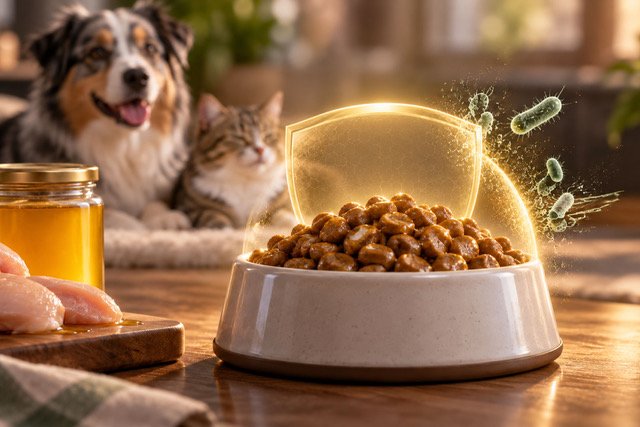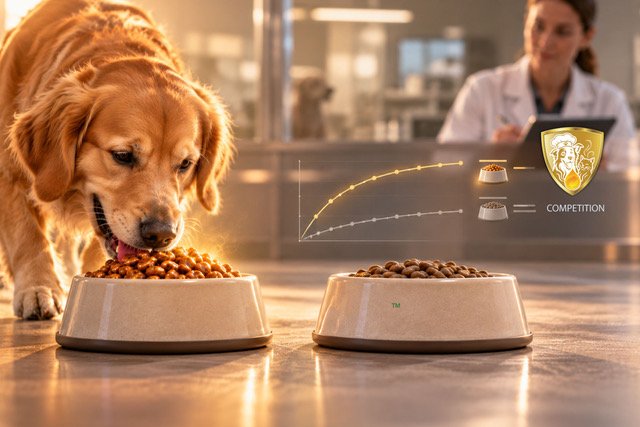
Sustainability has become an important consideration throughout the pet food supply chain, but evaluating an ingredient requires more than identifying whether it comes from an animal or a plant. Manufacturers must consider the emissions, resources, waste, water use, and ecological effects associated with producing it. Across these measures, Pet Food Solutions Refined Chicken Fat offers meaningful advantages over plant-based oils while improving upon the quality and performance of standard rendered chicken fat.
Looking at the Complete Sustainability Picture
No single measurement tells the entire sustainability story. An ingredient that performs well in one area may create greater environmental consequences elsewhere, which makes it important to examine its full production process.
A complete sustainability assessment considers:
- Carbon footprint
- Waste streams and emissions
- Use of natural resources
- Effects on ecosystems and wildlife habitats
- Water usage
Examining these factors together provides manufacturers with a clearer understanding of an ingredient’s environmental impact.
Making Better Use of Existing Resources
Chicken fat comes from portions of the bird that are not commonly consumed by people. Rendering recovers value from those materials and turns them into useful ingredients instead of sending them to landfills, where decomposition would generate additional carbon dioxide.
Pet Food Solutions builds upon this existing environmental advantage by refining standard rendered chicken fat into a cleaner and more consistent ingredient. The process removes most of the non-fat impurities that can contribute to quality concerns, equipment clogs, tank residue, and unusable product.
Unlike crops grown specifically for oil production, Refined Chicken Fat does not require additional agricultural land. It makes more complete use of materials already produced by the poultry industry, reducing the demand for separate land, water, and other natural resources.
Comparing Carbon and Ecosystem Impacts
Plant-based oils are often viewed as sustainable alternatives to animal fat. However, producing them can require significant land, energy, processing, transportation, and water.
Research comparing emissions from different oils found that rendered chicken fat generates approximately:
- Eight times less carbon dioxide than soybean oil
- Three times less carbon dioxide than canola oil
The expansion of oil-producing crops can also contribute to deforestation, habitat loss, and declining biodiversity. Tropical oils such as coconut oil may place additional pressure on sensitive ecosystems that support species with limited habitats.
Pet Food Solutions adds only a limited carbon footprint during refining, primarily through steam generation and transportation. Delivery by rail can reduce the transportation impact even further.
Turning Separated Materials Into Useful Products
The non-fat materials removed during refining are not sent to a landfill. Pet Food Solutions directs them toward other productive uses, including animal feed, fertilizer, biodiesel, and other bioenergy applications.
This zero-waste approach allows every part of the original material to serve a useful purpose. The refining process also avoids organic solvents and chemical reagents, creating a cleaner path from standard rendered fat to the finished ingredient.
Manufacturers receive more usable fat in each shipment because much of the sludge and other non-fat material has already been removed. That can mean less product waste, fewer clogged lines and nozzles, and fewer interruptions for cleaning or maintenance.
Sustainability With Practical Value
Refined Chicken Fat demonstrates that environmental responsibility and manufacturing performance can support one another. It recovers value from an existing poultry byproduct, produces substantially fewer carbon emissions than common plant-based oils, and turns the materials removed during refining into feed, fertilizer, or bioenergy.
Manufacturers also receive a cleaner ingredient that creates less residue, reduces unusable product, and supports more efficient operations. With lower emissions, a zero-waste process, and practical manufacturing benefits all working together, the difference is clear.
The complete sustainability findings are available in the Pet Food Solutions Refined Chicken Fat White Paper released in October 2026. The paper also explores the safety, quality, palatability, and operational benefits of Refined Chicken Fat.