Chicken fat is a common ingredient in pet food, but few brands know exactly how it’s made or where it comes from. The truth is that standard chicken fat can vary widely in quality depending on how and where it’s rendered. With little visibility into the process, pet food makers are often left with uncertainty about what they’re really using. Gold Shield® Refined Chicken Fat eliminates that uncertainty by providing a cleaner, safer, and more transparent option.
Understanding Standard Chicken Fat Sources
Standard chicken fat can be produced through two main rendering methods: integrated and independent.
Integrated rendering occurs within poultry processing facilities, using byproducts generated on-site. This type of rendering can produce a higher-quality output, including edible fats, and ensures fresher inputs and better control over quality.
Independent rendering, on the other hand, collects raw materials from multiple external sources, sometimes including expired or downgraded material from grocery stores and restaurants. This method typically involves a mix of materials, with a primary focus on inedible output (such as for feed or industrial use).
How Rendering Shapes the Final Product
Rendering is an essential process that turns poultry byproducts into valuable, energy-dense ingredients. When handled correctly, it elevates the natural nutrients in chicken fat and creates a product that adds both flavor and function to pet food.
The key lies in what goes into the process and how it’s managed. High-quality, fresh raw material leads to high-quality output. But when the material is poorly handled, aged, or sourced inconsistently, even the best rendering equipment cannot fully compensate.
The quality of rendered chicken fat depends on two factors:
- The freshness and cleanliness of the raw material
- The care and precision of the rendering process itself
Rendering is only as good as what it begins with. When clean, well-sourced material is processed under controlled conditions, the result is a reliable, stable ingredient that performs better in both formulation and finished product.
Why Source Transparency Matters
Pet food manufacturers are responsible for delivering products that pet owners can trust, but transparency is difficult when the FDA does not require suppliers to disclose where their rendered fats originate. This lack of visibility leaves brands vulnerable to sourcing inconsistencies and quality risks that could affect both safety and brand reputation.
Knowing exactly where your ingredients come from allows you to build reliability and confidence into every formulation. Transparency means:
- Fewer unknowns in the supply chain
- Greater control over product quality
- Stronger trust between brand and consumer
It is not just about meeting standards. It is about exceeding them.
How Gold Shield® Removes the Guesswork
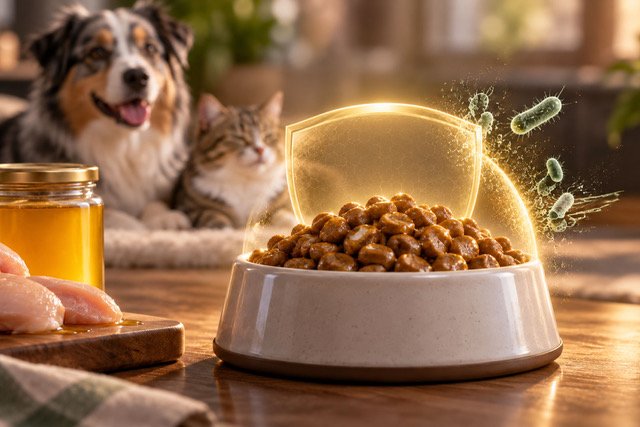
Gold Shield® Refined Chicken Fat was designed to bring clarity, consistency, and confidence to pet food formulations. The raw material we use comes from integrated rendering, which as we described above, is higher-quality, fresh, and edible. This means that the Gold Shield® refining process starts with fat that is cleaner and more pure, and then elevates it even further, removing non-fat impurities for better safety, quality and stability.
Gold Shield® takes the uncertainty out of sourcing. When you know exactly how your chicken fat is made and where it comes from, you can stand behind your product with confidence.
The Difference is CLEAR.